“AI search doesn’t bring in any leads, look here.” The screenshot behind that sentence is familiar: Google Analytics, referral traffic, a handful of conversions. A manager and an employee look at it and conclude that AI search is not worth the budget.
That conclusion often rests on the wrong question. Analytics answers “which channel was the last click before the lead?” It does not answer “where did this buyer first hear about us?”
Why AI search leads show up as organic or paid search
Many buyers do not click through from an LLM answer. They ask ChatGPT or another assistant several questions about the category, see which brands come up, and then open Google and search for one of those brands by name. That visit is recorded as organic or paid search, because that is the last click.
The AI step happened. Analytics did not see it. Budget and growth decisions made from that report undervalue AI search, and they do it with numbers that look precise.
Tracking is also fragile on the traffic that is recorded. In October 2026 many sites saw ChatGPT traffic fall overnight because links lost their UTM tag and referrer, and the visits landed in Direct. We wrote up what was reported and what to check.
The fix: ask the buyer
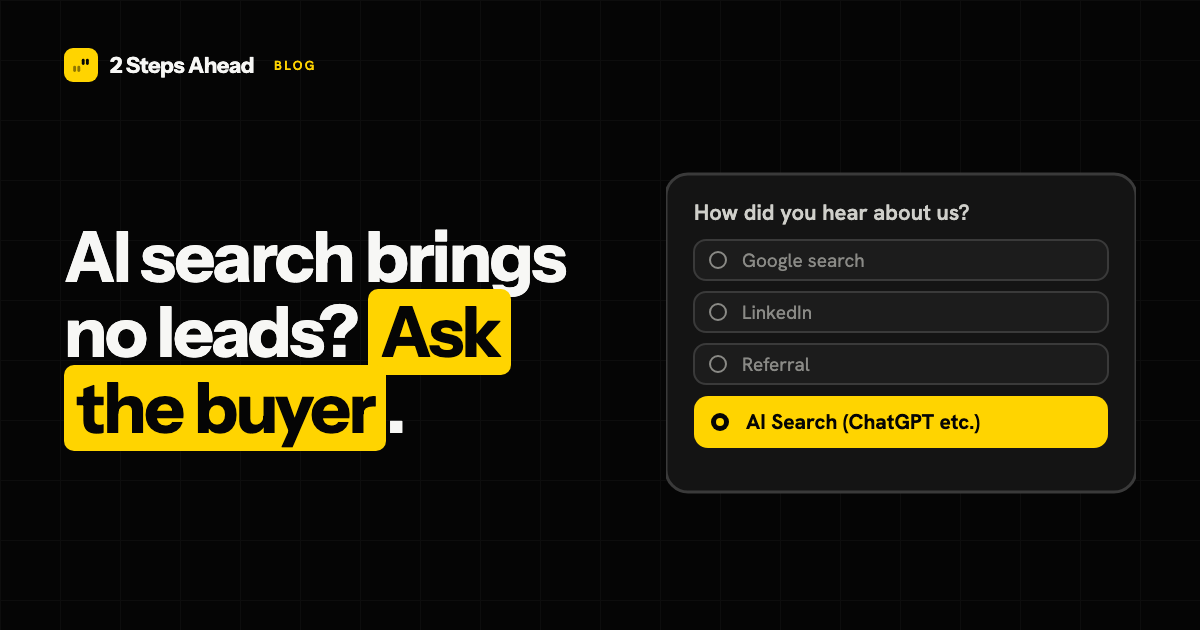
Before we start with a client, we ask them to add one question to their signup or demo form:
“How did you hear about us?”
Include “AI Search (ChatGPT etc.)” among the answers, next to the options you already have: Google search, LinkedIn, a referral, an event, and an open “Other” field.
Buyers can tell you what analytics cannot: that they asked an assistant first. Expect the share of “AI Search” answers to be larger than the AI share in your channel report, and expect the difference to show you how much AI-assisted pipeline was filed under another name.
Get more from the question
- Add a follow-up: “What was the first prompt you used?” The answers show the wording buyers actually use, which is better input for your tracked prompts than a keyword tool’s guess.
- Keep the form short: if another field is too much, show the question as a popup the first time a user logs in, or ask it in the first onboarding email.
- Use a fixed answer list plus “Other”: you can count the fixed answers, and the open answers tell you which options to add next.
- Review it every month: compare the self-reported share with the channel data, and with branded search in Search Console, so you can see the two move together or apart.
What self-reported attribution cannot do
It is not exact. People forget, name the last thing they saw, or pick the first option on the list. Treat it as a second view on the same pipeline, not a replacement for analytics. The two together are more reliable than either one alone, and a large gap between them is itself a finding.
It also tells you what happened after the fact. To see which prompts name your brand, at what position and from which sources, you measure the answers themselves against a baseline set before the work starts. That is how we report visibility to clients, and why sessions alone are a weak measure of AI search.
Frequently asked questions
Why does Google Analytics show few leads from AI search? Last-click attribution credits the final visit before the conversion. Many buyers ask an LLM first and then search for your brand in Google, so the lead is filed as organic or paid search.
What should I ask on the form? “How did you hear about us?”, with “AI Search (ChatGPT etc.)” as one of the answers. Add “What was the first prompt you used?” as a follow-up.
What if I do not want a longer form? Show the question as a popup the first time a user logs in, or ask it in the first onboarding email.